AISESA Youth Network
A network of early-career African researchers, fellows, and graduate students working across cluster boundaries to build the next generation of African systems leaders.

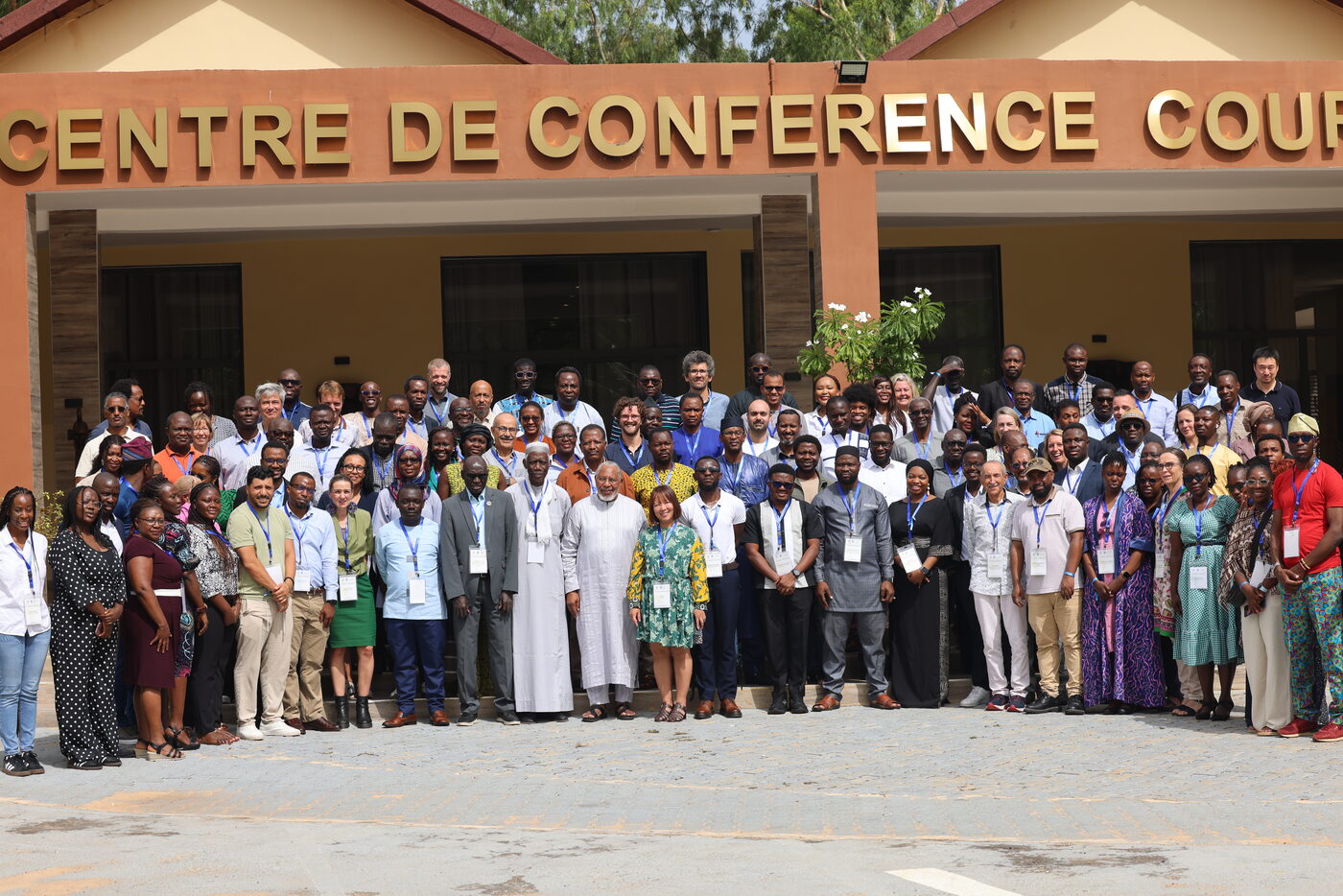
African researchers, fellows, partners, and friends working together for African energy futures. Use the filters below to explore the network by thematic area, cluster, country, field, or institution.
Africa has no shortage of energy strategies, scenario models, or policy frameworks. What it has too little of is knowledge that actually changes what gets built, for whom, and on whose terms.
PanAfriCarbon
East Africa Center for Research and Strategic Studies
AISESA
Clean Technology Hub
Université de Ségou
AISESA
PBL - Independent research for a future-proof Netherlands
PBL Netherlands
Ministère de l’Energie et de l’Eau
Moi University
AISESA
University of Port Harcourt
Retired
University of Port Harcourt
University of Port Harcourt
University of Bristol
University of Oxford
University of Port Harcourt
Clean Technology Hub
West African Power Pool
Great Zimbabwe University
ESKOM Holdings SOC
UCL STEaPP
AISESA
London School of Economics and Political Science
Africa Green Economy & Sustainability Institute
Delft University of Technology
University of Wuppertal
Newcastle University
African Development Bank
University of Calabar, Calabar, Nigeria
Society for Planet and Prosperity
University College London
Addis Ababa University
Clean Technology Hub
University of Oxford
African Finance Corporation
IDDRI
AKADEMIYA2063
Strathmore University
UNCCD
Great Zimbabwe University
University of Oxford
University of Cape Town
American Institute of Secure AI and Cyber
Odyssey Energy Solutions
University of Port Harcourt
University College London
Delta State University
École des Mines de Paris
AISESA
AISESA
University College London
University of South Africa
The Open University
The Open University and The University of Johannesburg
AISESA
Clean Air Task Force
Usmanu Danfodiyo University Sokoto
Senfkorn Energy Limited
Azalaï Hotels Group
AKADEMIYA2063
AISESA
Sheffield Hallam University
MINES ParisTech, PSL University
What Next Forum
University of Wolverhampton
University of Port Harcourt
University of the Witwatersrand
APRI - Africa Policy Research Institute
AKADEMIYA2063
National Academy of Sciences and Techniques of Senegal
University of Maryland College Park
German Institute of Development and Sustainability (IDOS)
University of Wuppertal
University of Oxford, UK / University of Wuppertal, Germany
AISESA
Vrije Universiteit Brussel (VUB)
APRI – Africa Policy Research Institute
Ahmadu Bello University
Arizona State University
Bells University of Technology
University of Delware
Climate Action Network International
Norwegian University of Science and Technology (NTNU)
Cypher Crescent Limited
The Nelson Mandela African Institution of Science and Technology (NM-AIST)
University of Maryland
University College London
University of Zambia
AISESA
Self-organised groups of AISESA members working together on a shared interest, open to any member who wants to get involved.
A network of early-career African researchers, fellows, and graduate students working across cluster boundaries to build the next generation of African systems leaders.
The accelerating global energy transition has intensified demand for a set of minerals that are disproportionately concentrated in Africa. Cobalt in the Democratic Republic of Congo, lithium in Zimbabwe and Ghana, manganese in South Africa, and graphite across East Africa represent a significant structural opportunity for the continent. At the same time, Africa's historical experience with extractive industries offers important cautionary lessons about how resource wealth can fail to translate into sustainable development, particularly for communities in proximity to extraction sites. The governance of critical minerals therefore sits at the intersection of energy policy, development politics, environmental justice, and global trade, making it one of the most consequential arenas of policy debate for African countries in the coming decade.
A network of early-career African researchers, fellows, and graduate students working across cluster boundaries to build the next generation of African systems leaders.
The AISESA Youth Network organises peer mentoring, methods workshops, and fellowship opportunities for early-career members. We meet online, at the annual in-person AISESA Congress, and host visiting-fellow exchanges between AISESA partner institutions.
Currently convened by Eileen Lara. 1 active members.
The accelerating global energy transition has intensified demand for a set of minerals that are disproportionately concentrated in Africa. Cobalt in the Democratic Republic of Congo, lithium in Zimbabwe and Ghana, manganese in South Africa, and graphite across East Africa represent a significant structural opportunity for the continent. At the same time, Africa's historical experience with extractive industries offers important cautionary lessons about how resource wealth can fail to translate into sustainable development, particularly for communities in proximity to extraction sites. The governance of critical minerals therefore sits at the intersection of energy policy, development politics, environmental justice, and global trade, making it one of the most consequential arenas of policy debate for African countries in the coming decade.
The working group is grounded in AISESA's core commitment to African-led, evidence-based analysis. Critical minerals governance is not a peripheral concern for energy systems analysis; it is increasingly central to questions of energy security, clean energy pathway design, technology access, and equitable financing. By positioning critical minerals as a cross-cutting theme, AISESA signals that the resource politics of the energy transition cannot be separated from the technical and financial dimensions that have traditionally received greater attention in the energy systems literature.
The working group works across AISESA's clusters, contributing directly to Cluster 1 (clean energy pathways), Cluster 3 (policies and governance), and Cluster 4 (access to affordable finance and technologies), while also supporting the broader institution-building aims of Cluster 5 by developing the analytical capacities of African scholars working in this field.
Currently convened by Dr Gerald E. Arhin.
Membership is open to African researchers, fellows, and partner-institution staff working at the energy & climate & development intersection.
Get in touch