Renewable energy investment is not simply a question of building solar farms or wind turbines. Africa has huge renewable energy potential, but turning that potential into real projects is often difficult. Investors want stable rules, predictable contracts, and a fair balance of risk. Governments must weigh what these projects offer the country: more electricity generation, greater reliability, affordability, and access for people who are still underserved.
It is also a question of how governments organise the electricity sector, how projects are financed, and how risks are managed. A new study in Energy Policy compares Ethiopia, Morocco, Nigeria, and South Africa. It finds that government strategies depend on political economy, the structure of the country’s electricity sector, resource availability, energy security concerns, and the risks attached to operating in a particular country and to individual projects.
The research is qualitative and comparative, built in stages. It first paired Morocco and South Africa, similar systems in some respects, then widened to Ethiopia and Nigeria, which represent different development paths, from state-led large projects to decentralised electrification. This revealed the broader logic behind each government’s strategy rather than isolated policy choices.
Rather than asking which country has the “best” model, the study asks a more practical question: what strategy is the government using to promote renewable energy investments? This framing matters because what works in one place may fail in another if the electricity sector structure, risks, political economy, and institutions are mismatched.
Four distinct strategies
One of the study’s most useful contributions is a typology of government strategies. It identifies four models.
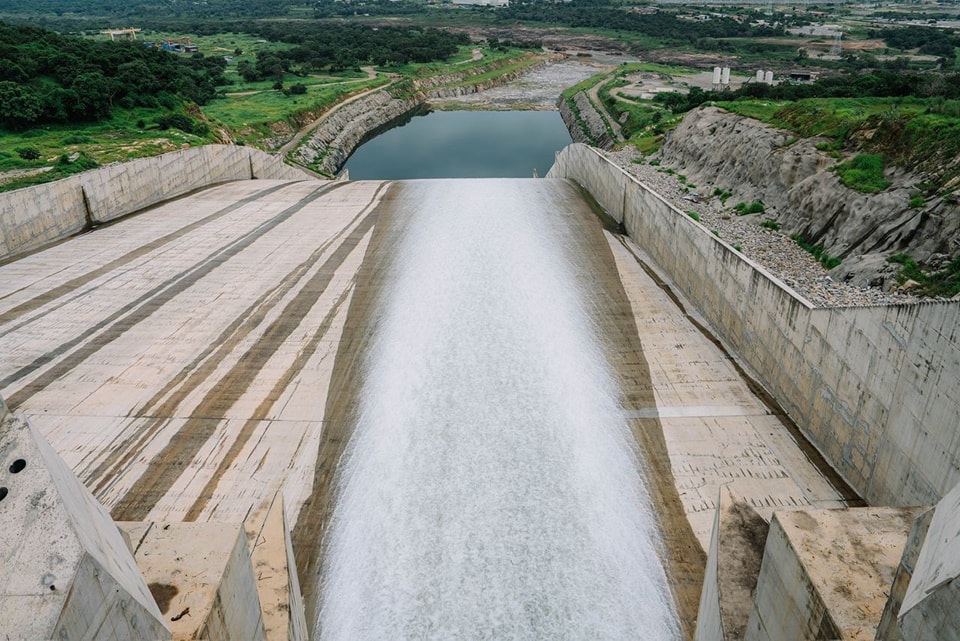
State-led centralised investment model: In Ethiopia, the government plays the dominant role in planning and delivering renewable energy projects, particularly large-scale hydropower. Its hydropower development drew on the potential of the Blue Nile, but faced stiff opposition from countries in the Lower Nile.
Ethiopia could not attract financing from multilateral development partners or the private sector, given the high country and project risks, so it self-financed through domestic resource mobilisation: the government balance sheet, diaspora bonds, and other domestic sources. China provided additional financial support at later stages, mainly for critical equipment and transmission lines. The state-led strategy ensured continuity in financing even through a change in government. Ethiopia’s model shows the power of strong state direction: an activist developmental state taking full responsibility for large-scale hydropower to drive economic development and productive transformation.
Co-development IPP model: Morocco works closely with independent power producers (IPPs), private companies that generate electricity for sale. A state-owned institution acts as an equity partner, reducing project risk, while purely private projects are also allowed. This is a more collaborative approach, in which private firms are brought in through structured cooperation with the state, and the state mitigates risk through the state-owned firm and the national utility. It attracts investment while retaining government oversight.
Competitive-auction IPP model: In South Africa, private firms compete for projects through government-run auctions. The Renewable Energy Independent Power Producers Procurement Programme (RE-IPPPP) has attracted substantial private financing and added over 6,280 MW to the country’s generation capacity across multiple bid windows, addressing the capacity shortage behind the planned outages, or load-shedding. Its success builds on the strength of the South African electricity sector, the ability of the utility, Eskom, to enter long-term power purchase agreements (guaranteed buyers for the electricity), and an institutional design that allocates each risk to the partner best able to manage it. Competition can lower costs and raise efficiency, but only if the rules are clear and investors trust the process.
Decentralised electrification model: Nigeria leans towards local and distributed solutions rather than large centralised grid projects, reflecting the poor state of its electricity sector. It focuses on mini-grids (small local networks that operate independently of the main grid) and standalone systems to reach underserved populations spread across thousands of dispersed rural settlements. This may be especially useful where centralised infrastructure is expensive or slow to expand.
These models reflect different political economies and risk-allocation strategies. Each country has decided differently on the types and scale of projects, who pays, who plans, who owns, and who absorbs the risk if projects underperform or fail. Renewable energy policy therefore looks very different from one country to another. Nor is it fixed: as political economies shift and perceptions of country and project risk change, strategies may evolve too.
The bigger lesson
The study’s biggest message is that government strategies should fit local reality. A country with strong state capacity may lean towards centralised investment; one with deeper private-sector participation may prefer auctions or co-development; one with dispersed or hard-to-reach populations may need decentralised solutions.
That does not mean one model is universally superior, or that African countries need to follow a set pathway. The article argues the opposite: the right strategy is the one that matches domestic political and economic conditions. That is a useful reminder for policymakers who often search for “best practices” as if they were universal recipes. The more important task is to match investment rules to the realities on the ground, shaped as they are by local institutions, political choices, and infrastructure.
Ethiopia, Morocco, Nigeria, and South Africa each demonstrate a different path toward the same broader goal: achieving domestic energy security and sovereignty through renewable energy investment.