
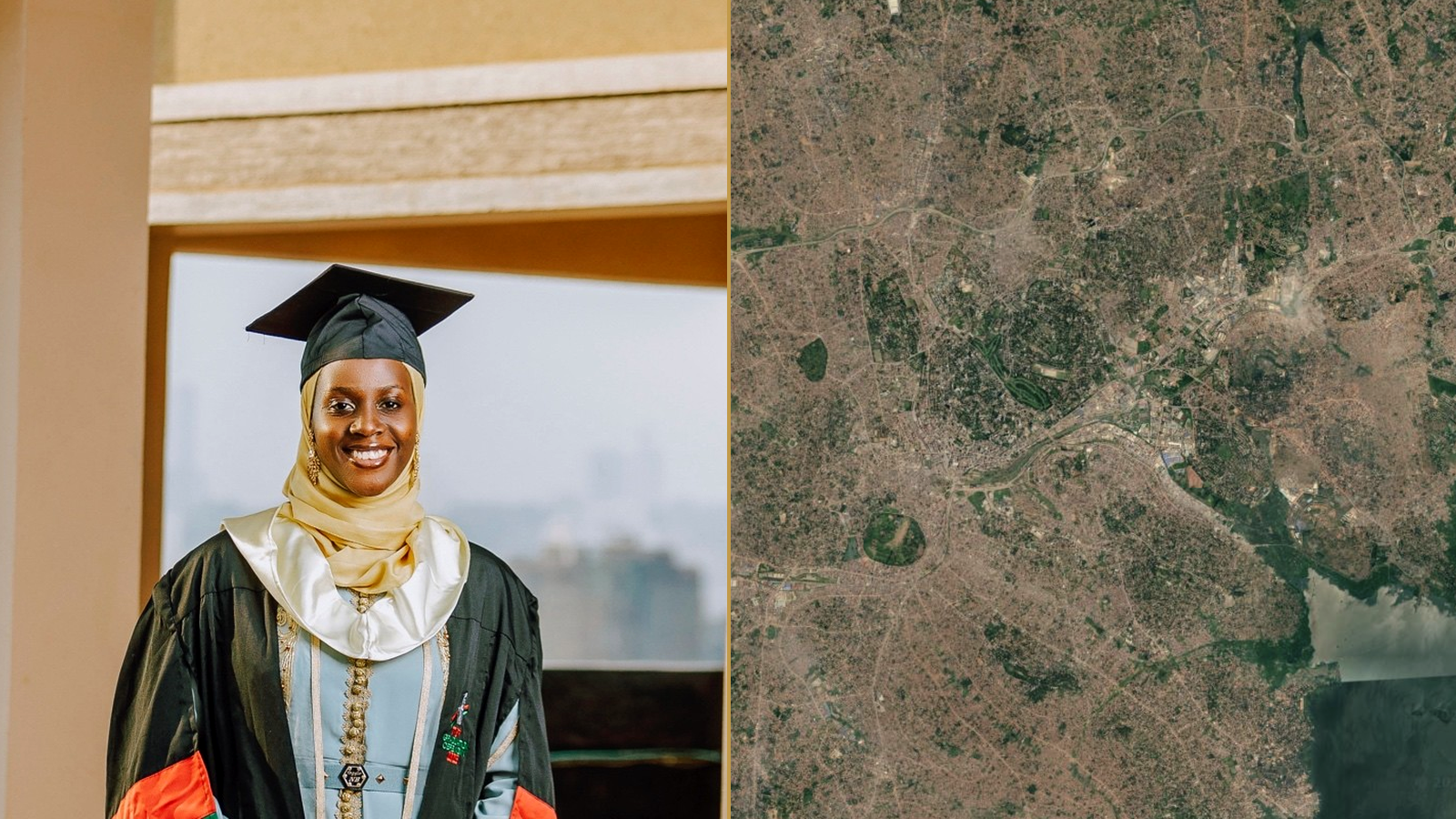
Nabaggala Nashua Kimuli is an Ugandan researcher and sustainable energy advocate pursuing a PhD in Management at Makerere University under the AISESA PhD Fellowship Programme — focusing on effective implementation approaches for energy access. She holds a Master’s degree in Energy Economics and Governance and is passionate about bridging the gap between research, policy and practice to ensure that clean energy solutions are accessible, affordable and sustainable for all.
What first drew you to the topic of energy, and what has your path looked like leading up to your PhD?
I have always been a curious person with a strong desire to understand how systems work and how they can be improved to create positive change. Growing up in Uganda, I became increasingly aware of the challenges that communities face in accessing reliable and affordable energy, despite the country's vast renewable energy potential.
My academic journey initially focused on economics, which helped me understand the role of policy and institutions in driving development. As I explored different development challenges, I became particularly interested in energy because it sits at the centre of economic growth, education, health, environmental sustainability, and poverty reduction. The way people produce, distribute, and use energy today will have a significant impact on future generations.
Uganda has made remarkable progress in expanding renewable electricity generation, particularly through hydropower and solar energy. However, many communities, especially in rural areas, still lack access to modern energy services, and a large proportion of households continue to rely on traditional biomass such as firewood and charcoal for cooking. These realities inspired me to pursue further research in sustainable energy systems and eventually led me to undertake a PhD focused on improving energy access for underserved communities.
For your master's, you carried out an experimental study of how biogas technologies get implemented in Uganda. What did you find, and what was particularly distinct about the Ugandan context?
My master's research, titled "Economic Viability of Biogas Energy Systems in Uganda: A Case of Households," used simulation-based modelling to assess the economic feasibility of household biogas systems under different operating conditions. By combining technical and economic analyses, I evaluated the long-term costs and benefits of biogas relative to conventional household cooking fuels.
The findings showed that biogas can be a highly cost-effective and environmentally sustainable energy source over the long term. Once installed, biogas systems can significantly reduce household expenditure on firewood and charcoal while also reducing environmental degradation and greenhouse gas emissions.
However, the study also highlighted one of the major challenges in Uganda: the high upfront investment required to install a biogas system. Although the technology becomes economical over time, the initial cost remains beyond the reach of many households.
"Once installed, biogas systems can significantly reduce household expenditure on firewood and charcoal while also reducing environmental degradation and greenhouse gas emissions."
Another important finding was that technology deployment alone is not enough. In several communities where biogas systems had been introduced, some installations became non-functional due to inadequate maintenance, limited technical support, and insufficient user training. This revealed that successful implementation depends not only on the technology itself but also on ongoing support, community engagement, and cultivating local capacity.
In an experimental study, I used a simulation-based approach in which the biogas energy system was subjected to different conditions compared with firewood and charcoal to test its viability in households.
What have you been learning about where the gaps between research, policy and practice most limit everyday people's ability to take ownership of the energy systems, technologies and opportunities emerging around them?
One of the most important lessons I have learned is that access to technology does not automatically translate into adoption or ownership. Uganda has made significant investments in promoting clean energy technologies such as liquefied petroleum gas (LPG), electric pressure cookers, improved cookstoves, solar systems, and biogas. Yet many households continue to rely on traditional biomass for their daily energy needs as well as kerosene for lighting.
Affordability remains a major barrier, as many clean energy technologies are still expensive for low-income households. However, financial constraints are only part of the challenge. In many cases, communities are not provided with sufficient information, technical support, or training to confidently use and maintain these technologies.
"Deeply rooted beliefs influence adoption decisions and highlight the importance of designing energy interventions that are sensitive to local culture and community preferences."
I have also become increasingly interested in the role of language and communication. Much of the information provided about clean energy technologies is delivered in technical language or in languages that are not easily understood by local communities. Many rural households communicate primarily in local languages, and this can limit their ability to fully understand how technologies work, how to maintain them, and how to benefit from them.
Cultural practices also play a significant role. For example, many Ugandans believe that food cooked using firewood locally known as “enku” has a better taste than food prepared using modern cooking technologies. These deeply rooted beliefs influence adoption decisions and highlight the importance of designing energy interventions that are sensitive to local culture and community preferences.
What developments in Uganda have inspired you lately, or even, shaped your thinking about energy sovereignty?
I have been encouraged by the growing commitment across Uganda and the wider East African region to expand access to renewable energy technologies. In Uganda, initiatives promoting solar energy, clean cooking technologies, mini-grids, and off-grid electrification are helping to bring energy services closer to communities that have historically been underserved.
What inspires me most is the increasing recognition that communities should not simply be recipients of energy solutions but active participants in shaping them. Programmes that involve local communities in planning, implementation, operation, and maintenance are often more sustainable because they create a sense of ownership and responsibility.
These initiatives have strengthened my belief that energy sovereignty is not only about increasing access to electricity or clean cooking technologies. It is also about empowering communities with the knowledge, skills, and opportunities needed to participate in energy decision-making processes. When communities are involved in shaping their own energy futures, energy systems become more inclusive, resilient, and sustainable.
This perspective strongly informs my PhD research, which seeks to identify effective implementation approaches that place communities at the centre of sustainable energy transitions in rural Uganda.